Introduction
Social media has become an important part of our daily lives. Millions of people use platforms such as Instagram, Facebook, LinkedIn, YouTube, and X to communicate, discover products, and follow their favourite brands. For businesses, these platforms offer an opportunity to connect with customers and build a strong online presence.
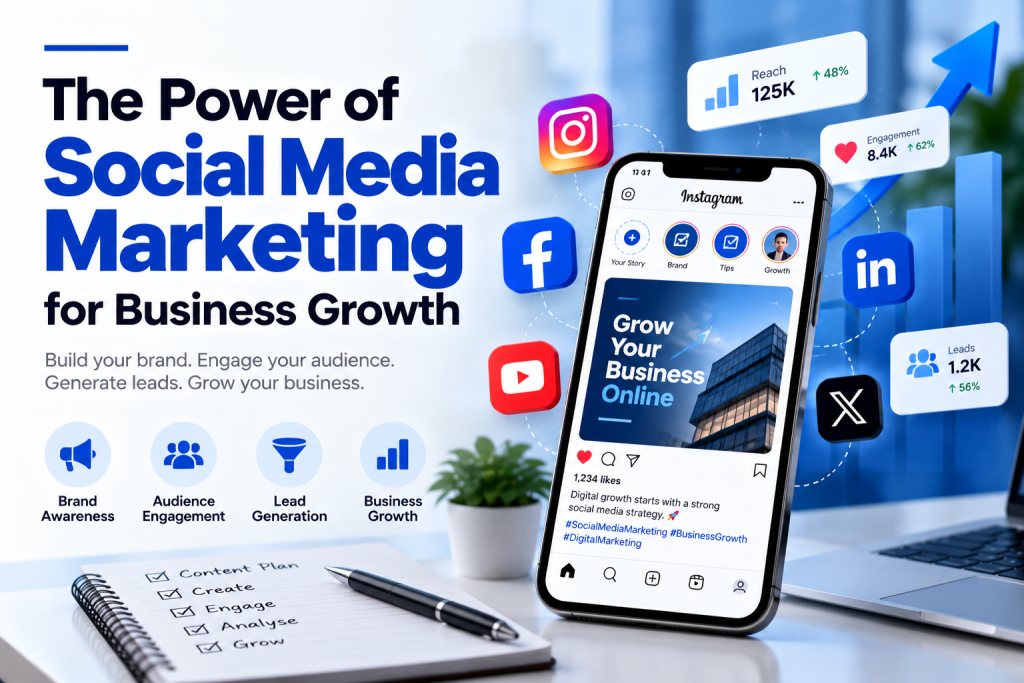
Social Media Marketing (SMM) is the process of promoting a business, product, or service through social media platforms. It involves creating engaging content, building relationships with audiences, running paid advertising campaigns, and analysing performance.
Whether a business is a startup, a local shop, or a large company, social media marketing can help increase brand awareness, attract potential customers, and support business growth.
1. What Is Social Media Marketing?
Social media marketing involves using social platforms to communicate with a target audience and achieve business goals. These goals may include increasing brand awareness, generating leads, driving website traffic, or improving sales.
For example, a restaurant can post food photographs and customer reviews on Instagram, while a digital marketing agency can share marketing tips and case studies on LinkedIn.
Social media marketing includes both organic marketing and paid advertising.
Organic marketing involves publishing content without paying to promote each post. Paid social media marketing uses advertisements to reach selected audiences based on available targeting options.
2. Choosing the Right Social Media Platforms
Not every platform is suitable for every business. Choosing the right platform depends on the target audience, business objectives, industry, and content format.
Instagram is useful for visual content such as reels, stories, product photographs, and behind-the-scenes videos. Fashion brands, restaurants, gyms, and lifestyle businesses can use it to showcase their products and services.
Facebook helps businesses build communities, share updates, promote events, and run targeted advertising campaigns. It can be useful for local businesses looking to reach relevant audiences.
LinkedIn is especially valuable for professional networking, B2B marketing, recruitment, and sharing industry knowledge. Agencies can use it to connect with business owners and potential clients.
YouTube
YouTube supports video-based marketing, including tutorials, product demonstrations, educational videos, and customer testimonials.
Key takeaway: Businesses should focus on platforms that best match their audience rather than trying to maintain every social media account equally.
3. The Importance of Content Creation
Content is one of the most important elements of social media marketing. Good content captures attention, communicates value, and encourages people to interact with a brand.
Businesses can create different types of content, including:
-
Educational posts that share useful information.
-
Entertaining reels and short videos.
-
Product demonstrations and service explanations.
-
Customer testimonials and success stories.
-
Behind-the-scenes content that shows the people and processes behind a business.
-
Promotional posts that highlight offers or services.
For example, a digital marketing agency can publish tips about SEO, Google Ads, content marketing, and social media strategies.
A consistent content calendar helps businesses plan posts in advance and maintain a regular publishing schedule.
4. How Social Media Marketing Builds Brand Awareness
Brand awareness refers to how familiar people are with a business and its products or services.
Social media allows businesses to introduce their brands to new audiences through engaging content, shares, collaborations, and advertising.
Consistent branding, including colours, typography, tone of voice, and messaging, helps audiences recognise a business across different platforms.
For example, a clothing brand that regularly shares styling tips, product photographs, and customer experiences can become more recognisable among its target audience.
Although reach and impressions help measure visibility, strong brand awareness also depends on relevance, audience trust, and repeated positive interactions.
5. Social Media Advertising and Lead Generation
Organic content can build relationships, while paid advertising can help businesses reach selected audiences and pursue specific campaign objectives.
Platforms such as Meta Ads Manager allow advertisers to create campaigns designed for goals such as awareness, traffic, engagement, and lead generation.
For example, a digital marketing institute in Pune could run a lead generation campaign to attract people interested in learning digital marketing. The advertisement might direct interested users to a form where they can submit their contact details.
To improve campaign performance, marketers should use relevant audience targeting, attractive creatives, clear calls to action, and suitable landing pages or lead forms.
They should also monitor metrics such as cost per lead, conversion rate, and lead quality instead of judging success only by likes and comments.
6. Measuring Social Media Marketing Performance
Measuring results helps marketers understand whether their strategy is achieving its objectives.
Important social media metrics include:
Reach: The number of unique people who see content.
Impressions: The number of times content is displayed.
Engagement rate: The level of interaction with content relative to an appropriate audience or exposure measure.
Click-through rate (CTR): The percentage of impressions that result in clicks.
Conversion rate: The percentage of relevant visitors or users who complete a desired action.
Cost per lead (CPL): The advertising cost associated with generating a lead.
Tools such as Meta Ads Manager and platform analytics dashboards help marketers evaluate performance and identify opportunities for improvement.
7. Common Social Media Marketing Mistakes
Businesses sometimes struggle on social media because they make avoidable mistakes.
-
Posting without a clear strategy or objective.
-
Publishing overly promotional content instead of providing value.
-
Ignoring comments, messages, and customer feedback.
-
Using inconsistent branding across platforms.
-
Buying fake followers or engagement.
-
Failing to review analytics and improve underperforming content.
A successful strategy requires consistency, audience understanding, genuine engagement, and continuous testing.
8. The Future of Social Media Marketing
Social media marketing continues to evolve through short-form video, creator partnerships, social commerce, personalised content, and artificial intelligence.
AI tools can help marketers brainstorm content ideas, draft captions, analyse performance, and streamline repetitive tasks. However, original ideas, accurate information, and human creativity remain important.
Businesses will need to focus on authentic communication, useful content, customer relationships, and measurable outcomes to remain competitive.
Conclusion
Social media marketing is a valuable digital marketing strategy that helps businesses increase brand awareness, engage customers, generate leads, and support growth.
By selecting suitable platforms, creating useful content, using paid advertising strategically, and tracking meaningful metrics, businesses can develop a more effective social media presence.
Success does not happen overnight. It requires understanding the target audience, experimenting with different approaches, and improving strategies based on results.
The key to successful social media marketing is to create value, build trust, and turn audience engagement into meaningful business relationships.