Introduction
In today\’s competitive online world, businesses need effective ways to communicate with customers, promote their products, and build long-term relationships. Although social media and paid advertising are popular marketing channels, email marketing remains a valuable tool for businesses of all sizes.
Email marketing is the process of sending emails to subscribers and potential customers to share information, promote products or services, provide updates, and encourage specific actions.
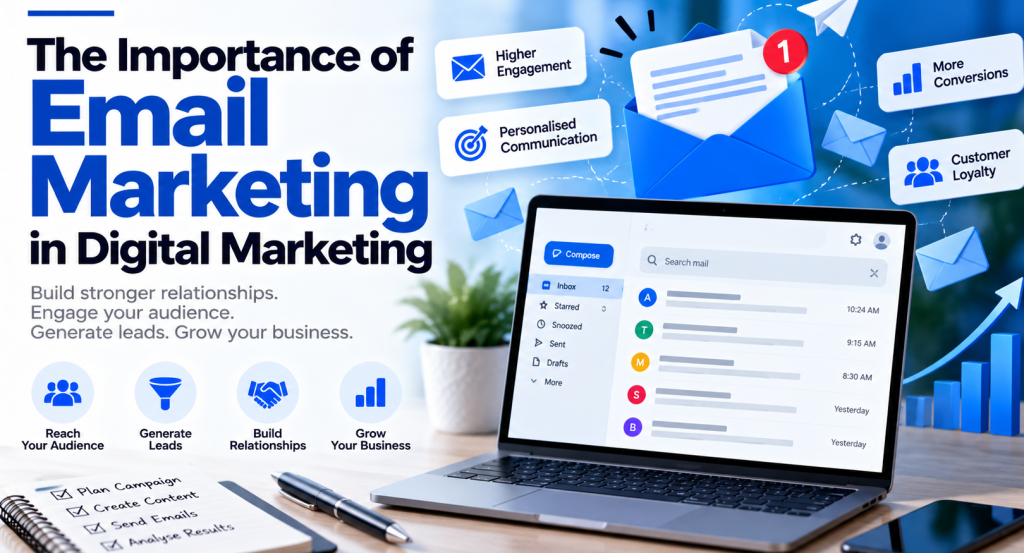
From welcoming new subscribers to announcing special offers, email marketing helps businesses communicate directly with their audiences. When used strategically, it can support customer engagement, lead generation, and business growth.
1. What Is Email Marketing?
Email marketing is a digital marketing strategy that uses email to communicate with an audience. Businesses collect email addresses through methods such as website subscription forms, enquiries, registrations, and customer purchases, with appropriate consent.
For example, an online clothing store can send customers updates about new collections, while a digital marketing institute can email course information to people who have requested details.
Email marketing can serve different purposes, including building brand awareness, nurturing leads, promoting offers, sharing educational content, and encouraging repeat purchases.
2. Types of Email Marketing
Businesses use different types of emails depending on their objectives.
Welcome Emails
Welcome emails are sent when someone subscribes to a mailing list or creates an account. They introduce the brand, explain what subscribers can expect, and provide useful next steps.
Promotional Emails
Promotional emails inform customers about discounts, product launches, seasonal offers, and special events. They should communicate the offer clearly without overwhelming subscribers.
Newsletter Emails
Newsletters share useful information, company updates, industry news, educational content, and recent blog posts. They help businesses maintain regular communication with their audience.
Lead Nurturing Emails
Lead nurturing emails provide relevant information to people who have shown interest in a product or service but are not yet ready to purchase.
For example, a digital marketing agency might send a potential client a case study, a guide to SEO, and information about its services over a planned sequence.
Abandoned Cart Emails
E-commerce businesses may send reminders to customers who added products to their shopping carts but did not complete the purchase, subject to applicable consent and messaging requirements.
3. Benefits of Email Marketing
Email marketing offers several benefits when campaigns are planned carefully.
Direct communication: Businesses can communicate with subscribers through their inboxes without relying entirely on social media algorithms.
Personalisation: Emails can be tailored using relevant subscriber preferences, interests, and past interactions.
Customer relationships: Regular, useful communication helps businesses stay connected with their audiences.
Website traffic: Emails can direct readers to blog articles, product pages, service pages, or registration forms.
Measurable performance: Email platforms provide metrics that help marketers understand how subscribers interact with campaigns.
Automation: Businesses can automate welcome emails, follow-ups, reminders, and other repetitive communication.
Results depend on list quality, email relevance, deliverability, audience needs, and campaign execution.
4. Building an Email Subscriber List
A quality email list is more valuable than a large list of uninterested contacts.
Businesses can encourage people to subscribe by offering useful resources, newsletters, webinar registrations, product updates, or relevant guides.
For example, a digital marketing agency could offer a free SEO checklist in exchange for a voluntary email subscription.
Subscription forms should explain what people are signing up for. Businesses should collect only the information they need, obtain appropriate consent, and avoid purchasing lists or sending unsolicited bulk emails.
Providing a simple unsubscribe option helps maintain a trustworthy relationship with subscribers.
5. The Importance of Email Personalisation
Personalisation makes email communication more relevant to individual subscribers. Instead of sending exactly the same message to everyone, businesses can organise subscribers into groups based on their interests or interactions.
For example, an online store may send product recommendations based on previous purchases, while a training institute may send course information to subscribers who requested details about a specific programme.
Personalisation can include a subscriber\’s name, relevant content, suitable offers, and timing based on preferences.
However, personalisation should respect privacy and avoid using personal information in ways subscribers would not reasonably expect.
6. Email Marketing Automation
Email automation allows businesses to send emails automatically when specific conditions are met.
For example, when a person subscribes to a newsletter, an automated welcome email can be sent immediately. A few days later, the subscriber may receive a useful guide or an introduction to relevant services.
Automation can also support appointment reminders, onboarding messages, and customer follow-ups.
Tools such as Mailchimp, Brevo, and HubSpot offer email marketing features, although available functions vary by platform and subscription.
Automation saves time and helps businesses deliver consistent communication while allowing marketers to focus on strategy and content quality.
7. Measuring Email Marketing Performance
Tracking campaign performance helps marketers understand what is working and what needs improvement.
Important email marketing metrics include:
-
Delivery rate: The proportion of sent emails successfully delivered.
-
Open rate: The percentage of delivered emails recorded as opened, although privacy features and automated activity can affect its accuracy.
-
Click-through rate (CTR): The percentage of delivered emails that generate clicks, depending on the platform\’s calculation method.
-
Conversion rate: The proportion of recipients or visitors who complete a desired action.
-
Unsubscribe rate: The proportion of recipients who unsubscribe.
-
Bounce rate: The proportion of emails that could not be delivered.
Marketers should focus on meaningful outcomes such as qualified leads, purchases, registrations, and revenue rather than relying on open rates alone.
8. Common Email Marketing Mistakes
Businesses should avoid several common mistakes when running email campaigns.
-
Sending emails without appropriate permission.
-
Using misleading subject lines or excessive promotional language.
-
Sending too many emails and overwhelming subscribers.
-
Ignoring mobile-friendly design.
-
Failing to test links, formatting, and personalisation.
-
Not measuring conversions or campaign results.
-
Making it difficult for subscribers to unsubscribe.
A successful email strategy prioritises relevance, transparency, useful content, and a positive subscriber experience.
Conclusion
Email marketing remains an important part of digital marketing because it helps businesses communicate directly with their audiences, nurture potential customers, and maintain customer relationships.
By building a quality subscriber list, creating relevant content, using automation responsibly, and measuring campaign performance, businesses can develop effective email marketing strategies.
The goal is not simply to send more emails. It is to deliver the right message to the right audience at the right time.
Successful email marketing is built on trust, relevance, and consistent value for subscribers.